TerraPass blog

“Passive houses” yield aggressive carbon cuts

Adam Stein | December 30, 2008

Super-efficient homes require little heating or cooling.


I’m a little late to this party, but so-called “passive houses” have been lighting up in the blogosphere in the wake of this New York Times article:

Using ultrathick insulation and complex doors and windows, the architect engineers a home encased in an airtight shell, so that barely any heat escapes and barely any cold seeps in. That means a passive house can be warmed not only by the sun, but also by the heat from appliances and even from occupants’ bodies.

And in Germany, passive houses cost only about 5 to 7 percent more to build than conventional houses.

In the ideal case, passive houses require no furnace, no air conditioners, and, in fact, no thermostat. The airtight dwellings maintain a perfectly even and comfortable temperature by means of a ventilation system that automatically brings fresh air in from the outside, heating it to the proper temperature via exchangers and other low-energy systems. Even in fairly harsh climates, such homes “get all the heat and hot water they need from the amount of energy that would be needed to run a hair dryer.”

Passive homes have three essential elements:

  1. Superinsulation. Although not strictly necessary, passive houses usually have a boxy exterior shape that makes it easier to maintain a good thermal envelope.
  2. Efficient heat recovery. Passive homes have ventilation systems that draw a continuous supply of fresh air. Incoming air passes through heat exchangers that reclaim the energy in outgoing warm air. If necessary, incoming air can also be passed through underground ducts to pick up geothermal energy.
  3. Passive solar heating. Southern-facing, unobstructed windows with “triple low- emissivity glazing and superinsulated frames” capture more solar energy than they let out.

Although tuning and perfecting the systems has taken over a decade, all of these technologies fall into the category of “not rocket science,” allowing passive homes to achieve enormous energy savings with only slightly increased construction costs:

passive-house-energy-usage.jpg

The Passive House Institute has conducted a fair amount of research into user acceptance of the system. That is, do homeowners like their houses, and how well do they adjust to the mild behavioral changes such houses impose? The answer appears to be that they like them quite well. Passive houses keep a more even temperature than traditional houses — no more cold bathroom tiles or hot, stuffy rooms. And owners of passive houses tend to spend some of their energy savings on increased comfort. That is, they keep them a bit warmer than owners of traditional homes. Given that their houses have no radiators, that’s a bit of warmth they’ve earned.

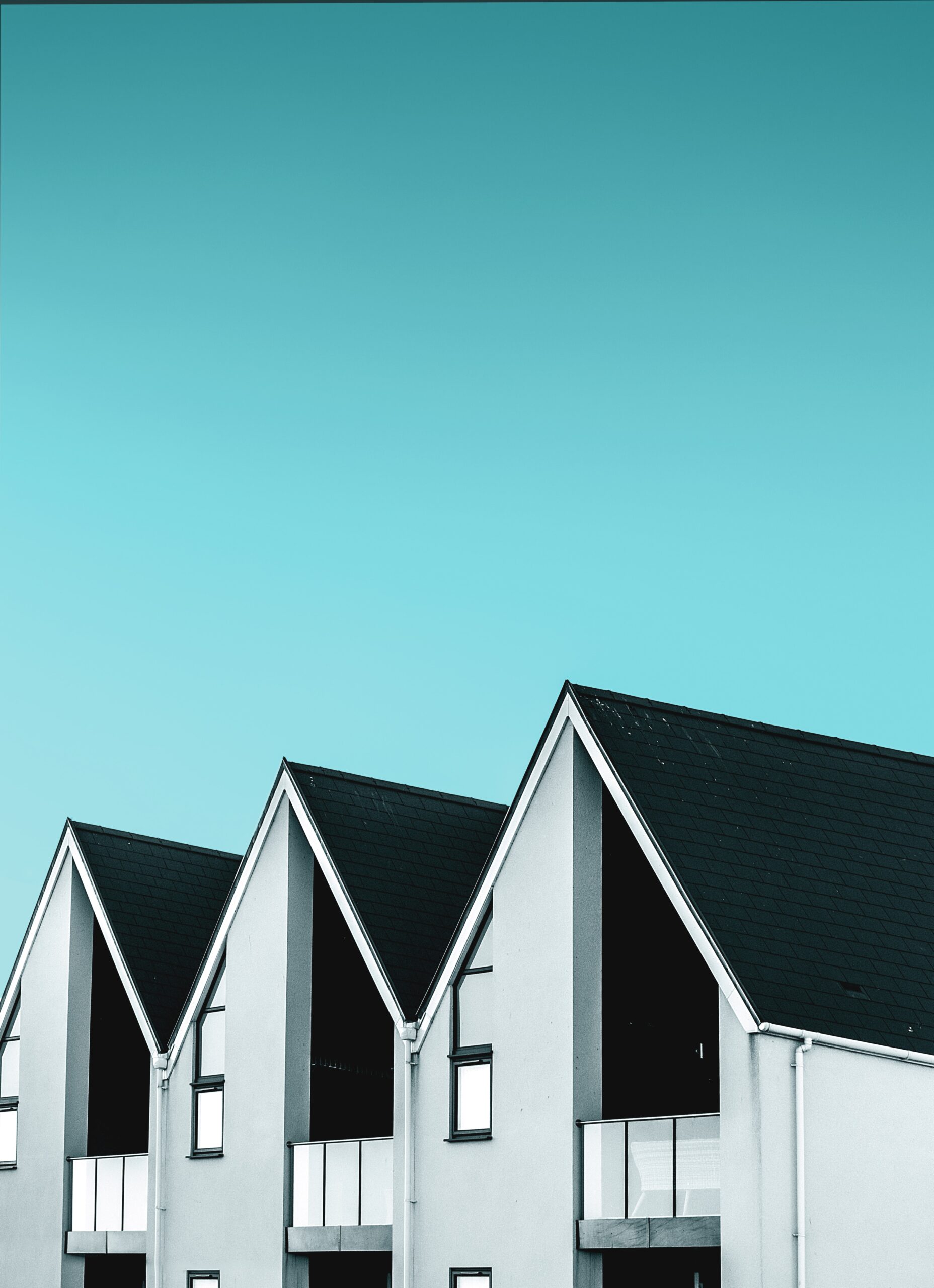
Image by Unkrig.

< Previous: Battery makers come begging    Next: Looking back, looking forward: 2008 edition >

Comments


  • 1.

    I am currently building a house and have been constructing in the “spirit” of passive house (Passivhaus) techniques. I costed out the difference between closed-cell, spray-in foam insulation (a non-toxic soy-based product), and standard fiberglass blankets (Dow-Corning). The soy-based foam insulation would have costed at least $20,000 vs the some $1500 we paid for standard fiberglass. I didn't compare the cost difference of having triple-glazed windows, but it too would have been significant. I would take this German cost differential of 5-7% with a *big* grain of salt. It may be true in Germany, where general building standards and costs are already very high (much higher than here or other European countries).

    I also researched installing a solar radiant heat system. For materials alone I estimated the costs for our modest house (around 1300 sq ft) between $15-$20 thousand. We ended up going with wood pellet, which cost $2000. Until building “green” goes down significantly in price, we will end up with the same situation as in the Carter years: a lot of interest will be generated, but in the end it will peter out as a fad because people can't afford it.


    Reply
  • 2.

    Reducing fuel usage sounds very needful.
    My question? Is research available on health of occupants over years time?

    EarthThunder


    Reply
  • 3.

    Roger, I think you're exactly right. The cost differential over U.S. building standards is going to be much higher. This should change over time as 1) efficiency standards in the U.S. become tighter, and 2) the cost of these components comes down. It would also be nice to see specialized mortgage options for high-efficiency homes, to help defray the up-front costs.


    Reply
  • 4.

    I appreciate Roger's note on cost, however the comparison of soya insulation versus fiberglas might leave the wrong impression. Double the insulation using fiberglas would double the cost to $3000 (plus some additional framing cost).

    Using "exotic" materials should not be involved in the comparison. There are lots of examples of lower cost low energy houses. People can be quite creative.

    BK


    Reply
  • 5.

    Responding to Roger's comments: they are so far out of line I can barely respond without making it sound like an attack, and it makes me wonder if he has some axe to grind, or just if some people tried to sell him a gold plated bridge to nowhere. It always amazes me how people can make the biggest purchase of their life and yet do so little homework about it, yet will pore over reviews about which microwave/cellphone/toaster oven is best. There are far more choices than batt vs. spray foam and it's not an all or nothing game. With intelligent design and construction methodologies huge improvements can be made. Yes, that last 5-10% of gains toward 100% efficiency may cost a lot but why not gather all that free low hanging fruit? As to commenter #2, it's pretty standard now for these airtight houses to use air to air heat exchangers which bring in fresh outside air heated by the outgoing warm air.


    Reply
  • 6.

    Hektor, I'm not sure if you understand what is required for a passive house: super-insulation is key, and things like triple-glazed windows are part of the standard. The goal is to be able to have a liveable house in northern climes without a full-scale heating system.

    I didn't pick up on what exactly you find problematic in my post, but spray-in closed cell foam is very, very expensive, no matter how you wish to gloss it over. Perhaps you are thinking of open-cell insulation, which is less (but not a lot) than closed-cell. Triple-glazed windows are about double in cost over regularly available double-glazed.

    Your post sounded like you were just pointing out how to make a house more efficient with moderately priced materials available at places like Lowes or Home Depot. This is laudable and definitely worth the effort, but such steps are long way from approaching the kinds of passive house efficiencies required to live in cold climates without a carbon-based (or expensive) heating system.

    It would be great if the costs could come down for these materials. There are a number of government incentives out there, but I found them almost as difficult to understand or apply for as in building the house itself. These need to be radically streamlined and simplified if they're are going to attain a mass appeal.


    Reply
  • 7.

    By Joe, 31st Dec, at 16.11

    As a soon to be builder of a passive house in Scotland,I note that no mention has been made of the desirability of including a good 'Thermal Mass' component in the house.

    I have avoided timber frame construction in favour of concrete block cavity walls containing phenolic foam boards, precisely to increase the thermal mass of the building; the purpose is to provide a constant reservoir of heat within the fabric of the house. This helps to keep a constant temperature.


    Reply
  • 8.

    Roger, you're not sure if I understand what is required for a passive solar house? What is this, some sort of solar dick swinging contest?

    Who died and said that triple pane glass is THE standard? YOU were the one moaning about high costs. And yes, indeed, I WAS "just" pointing out, as you yourself say, "you were pointing out how to make a house more efficient with moderately priced materials"!!!!

    "Such steps are long way from approaching the kinds of passive house efficiencies required to live in cold climates without a carbon-based (or expensive) heating system." ???? Who's requirements are these? Unless we meet these "requirements" we should go back and live in caves?


    Reply
  • 9.

    Rog, meet me out in the street and lets settle this man to man! lol Or hey, lets be friends instead. Come on over and let me pour you a cup of tea inside my warm cozy inexpensive passive solar home.


    Reply
  • 10.

    Hm. Maybe it's time we all settle down.

    Hektor, there in fact is a standard associated with passive house design. Lots of interesting details on the Passive House Institute web site, but here's a blurb:

    The term "Passive House" refers to a construction standard. The standard can be met using a variety of technologies, designs and materials. It is a refinement of the low-
    energy house (LEH) standard.

    "Passive Houses" are buildings which assure a comfortable indoor climate in summer and in winter without needing a conventional heat distribution system. To permit this, it is essential that the building's annual space heating requirement does not exceed 15 kWh/(m^2).

    So, the standard doesn't prescribe specific technologies, but in practice certain design choices are somewhat forced by the project's goals. Clearly, though, there is a spectrum of efficiency improvements, and plenty of good can be achieved without going "fully passive."

    I should also note that the passive house standard is designed to be affordable. That is, it is specifically not a gold-plated standard that requires exotic, expensive technologies that are out of reach of most home buyers. In Europe at least, the payback period on a passive home is pretty short.


    Reply
  • 11.

    Joe is correct, insulated concrete block is the predominant building material for walls in much of Europe, and in particular in Germany. I'm not even sure if it's possible to build a passive house with timber framing, if so, I think it would be with the kind of closed-cell approach I was pursuing before costs got the best of me. This would include 2x6 framing, which is now common at least in colder American regions. It's too bad that an insulated concrete industry never developed in the US, it's much more efficient and easier to work with. The German company Ytong tried to enter the US market a few years ago, without success.


    Reply
  • 12.

    I just moved into an ultra-efficient, super spacious, 2-story passive solar house with a 900 square footprint. In the 20 degree weather, the heater only pops on a few times for a few minutes a day. I can turn it off at night at night and the temp never drops below 55 degrees. The only consideration is remembering to burp the house daily and have a small airflow. It's a joy, and I feel great!


    Reply
  • 13.

    Our research in the '70's showed indoor air quality to be a big issue, especially when certain unfriendly materials are used in the house. As houses become more tightly sealed and more heavily insulated, these concerns rise, and burping the house becomes systematic air changes with heat exchangers, an activity much more cheaply oerformed by a slightly leaky house.

    Payback is another issue - in temperate climates, added R value becomes an unproductive expense at some point which can be established by modeling.

    And, in the end, entropy is inescapable; and who wants to live in a sealed box.


    Reply
  • 14.

    I think the key phrase here is "in the '70's." From the NY Times article:

    Decades ago, attempts at creating sealed solar-heated homes failed, because of stagnant air and mold. But new passive houses use an ingenious central ventilation system.

    The article also notes that you can open the windows in modern passive houses.


    Reply
  • 15.

    Ah yes, thermal mass! So important, and yet seemingly undervalued. The mass of the wall you describe must be able to store enough thermal energy to really dampen the swings without resorting to other heating sources at night, and also acting a cooling device in the hot months, when well worked. Edward Mazria, and others done a lot of work here that seems to be overlooked.
    Air, our atmoshere, is a rotten place to store energy. Very low density. As internal mass increases, thermally enclosed, temperature swings decrease - Has to physics, dictates it.

    Thanks again also to Adam, our moderator.


    Reply
  • 16.

    Hi, all--

    We built 7" thick walls (2x6 + horizontal 2x2 strapping) and filled the cavities with spray-in cellulose, which provides a complete fill and is airtight. This option is far less expensive than spray foam and much, much better than batts of any type. Batts are hard to fit around wires, pipes, vents and other obstacles to achieve full R-value. Plus, we reused a lot of newsprint instead of a virgin material. We live in a mild climate so I thought an R24 wall would be sufficient, but it would not have been much more expensive to build a double wall and fill with spray cellulose or fiberglass.

    Any spray-in option will provide much better air tightness than batts--a furnace filter is basically a skinny batt--and the Passiv Haus has to be quite airtight.

    Just to say, there are many choices among building technologies and assemblies are not limited to the extremes.

    Best,

    Mike


    Reply
  • 17.

    I totally agree that there are a lot of options and choices in improving the R-Value of a house, the problem is when one wishes to apply this to the passive house concept. I recall reading a while ago that there are an estimated five million single-family homes in New England where I live, with a very large percentage--the vast majority I'd wager--being built before 1950. We know these homes have very little effective insulation in their walls, which means that millions of New England homes have a general R value of, say, not much more than R10 or so. These homes are literally pouring out carbon waste by the millions of pounds a day, since most New Englanders heat by oil-based hot-water boilers. If we could raise the efficiency of all these homes to, say, an R-value above R20, the cost-savings would be dramatic.

    If we could develop a culture that fully recognizes how unbelievably wasteful our homes are in terms of energy, then the “lots of options and choices” mindset will be critical in helping people to improve their home efficiency in an economical and flexible manner. As many have pointed out, we somehow have *got* to develop this awareness in American society, but so far we're a long way from doing so.

    Improving the R-value of existing homes with “lots of options and choices” is a completely different animal than the passive house movement, which is a radical approach to home energy conservation. The standards and guidelines that are developed for passive houses are precisely to avoid the watering down of expectations and standards with vague-sounding “lots of options and choices”, which is great for the marketplace but does nothing for giving detailed guidelines on how to proceed; such vague statements do not help serious homeowners who want to use existing technology to maximize their home energy efficiency. We see what happens in the marketplace with vague terms like this in the auto industry: as soon as Honda and Toyota came out with their genuinely efficient next-generation “hybrid” cars (we owned an Insight, which got 64 mpg), Detroit immediately took the term and, of course, applied them to their SUVs.

    In reality, if you follow the standards in constructing a passive house, there are not a lot of options and choices in the US right now, and there is currently no way to spin-doctor the fact that the up-front costs are significantly higher than the typical cheaply constructed stick-built house that currently dominates the American landscape.


    Reply
  • 18.

    I assume that these houses only have south facing windows because they are in the northern hemisphere? In the southern hemisphere, they would have north facing windows?


    Reply
  • 19.

    Yes, having properly aligned windows in relation to the sun is an important concept for energy conservation. We had a south-facing all-glass four-season solarium with french doors on our last house, and in the spring and fall it provided virtually all the heat for our house on sunny days. It had special triple-glazed windows that repelled heat in the summer and let it in during the winter. German housebuilding places a high value on south-facing windows, both to provide light and for heat.


    Reply
  • 20.

    Hello,
    Roger has valid points as to the cost relationship per square foot. Construction loans that are included in wrap around land purchases have values that the providers must adhere to. The continuing urban sprawl that has it's foundations in the maximun yield per sq ft per dollar invested, has refined the slab on grade stick built 'california' style construction to a basic equation. This construction style has been exported now through-out the country, is taught in Project Management education programs at most engineering and construction based schools.

    We are all in agreement that this equation needs modification; yet, it will remain, as this is the nature of the development for profit. I believe this current dialog regarding alternatives to our avaiable construction theories are extemely valuable for 'knowledge shared is knowledge gained'. Applying these theories to construction other than for spec built is the challenge. Then applying these theories to current built dwellings is the goal (the 1950's buildings for example).

    Government is moving into this arena with laws such as California's AB32, but much must be done so this does not become a rich 'green' fad. Many things must be done before the solar goes on the roof and industry must evolve quickly to catch this gulf between the 'rich green fad' and the practical 'every man' application.

    I want to point you folks to a web site that might assist you all in employing the 'low hanging fruit' that can be used in the built dwellings, the spec builds and the track developements. This is not a plug for some retailer, this is to a site where the properitor is 'doing it' just like us and a friend. Check out these 'fruits' at newleafamerica.com.
    thxs dm


    Reply
  • 21.

    What was omitted in the NY Times article, in my opinion a significant lack in research on the topic by the author, is that Passive House based on the German Standard has been around in the United States since 2002. We have many different buildings in various climate zones already on the ground and implemented. The Berkeley project is just one example of many. I built the first Passive House in Urbana Illinois in 2003, it turned 5 this past September and the performance has been measured, evaluated, published and confirmed. It really works beautifully! It is a pleasure living in it! Recently we tested the indoor air quality. Compared to existing homes in town my home was the only one to comply with the indoor air requirements of the EPA. The Germans calibrated what the 70's did not get to. And we are talking Passive House, not Passive Solar House, different animals.

    Since early 2007 my partner and I have developed the Passive House Institute US and are Partner of the German Institute and have been working on over 20 projects during the last 5 years including multi-family projects that we have on the drawing board as of right now. Selected highlights of the built projects are documented in our most recent book "Homes for a Changing Climate - Passive Houses in the U.S." and if the author had researched properly, she might have been able to prevent some misunderstandings about PH as I saw reflected in the above comments. Passive Houses do not only work in Europe but in all climate zones, they do not have to be boxes and can't have windows. The 500 sq ft per person is a recommendation and not a requirement. There are many different ways to construct and insulate a Passive House. They do not have to be oriented perfectly, as there are passive houses with next to no opportunity for solar gains in cities for example. In a number of regions throughout the US and Canada there are local Passive House groups at work and Passive House consultants have begun working on Projects for new and retrofit applications. The Passive House movement is growing rapidly.
    I also like to mention, that Germany has solar radiation comparable to Alaska! If they can do it there you can do it anywhere, certainly in the United States where we have sun aplenty.


    Reply
  • 22.

    To the discussion about low cost materials used to reach a true passive solar standard, I would like to get any opinions on the Earthship concept. They seem to meet the mail in terms of building performance. From an aesthetic point of view, I see no reason they couldn't be designed to fit into most regional architectural styles.


    Reply
  • 23.

    @ roger


    I didn't read all of your comments after your first post, but I am wondering whether the $18,000 cost differential on insulation that you quote (and let's add in special windows, heat exchanger, etc--all the components necessary to make a PassivHaus--is a lot less than the lifetime cost of heating a less-insulated house. And even if it isn't, it comes at no carbon cost.

    I do realize that it is more difficult in the US to build this way, but really, if you are environmentally conscious and making new construction, I think we should make every reasonable and unreasonable effort to do so. It's not like we have lots of time to redo the decisions we are making now re: carbon emissions, which is the real problem here, not energy use per se.

    In any case, congratulations for making the efforts you made to limit the ongoing carbon emissions from the operation of your house.

    On a separate topic, I think it is better to refer to the concept as the Passivhaus design, to avoid conflating it from 70-s era US passive solar construction concepts.


    Reply
  • 24.

    @ hektor
    "solar dick swinging contest?"

    Now that is funny!

    @ roger--i reread all your posts and wanted to give you props for your awareness of the issues, knowledge about the market, and design and construction decisions you make in the constraints of our still-archaic building market in the U.S.


    Reply
  • 25.

    Steve,
    a big difference between the German and the American socio-political environments is that Germans *do* recognize the long-term value of the initial investment in a high-efficiency house. For the past 20 years the Germans have ”walked the talk“ by providing homeowners significant initiatives through subsidies, grants, and low interest loans to allow them to afford this investment. Under American Reaganomics, somehow the marketplace would allow this to play out here in the States, which we now know is ludicrous.

    I'm keenly aware of the ROI for the upfront costs of applying Passivhaus concepts, but unfortunately, with virtually no social, community, or government support, I as a homeowner simply cannot afford that price differential between the super-insulation of a spray-in closed cell solution and our putting in fiberglass blankets. The price comparison is a bit skewed because the some $20,000 would have also covered the labor, whereas the Dow blankets were put in by me.

    Nonetheless, for $50,000 in material costs (I did all the work myself, including plumbing and electrical), we've been able to build a 1200 sq ft house in coastal Massachusetts that's insulated enough to be heated by a single pellet stove for about $700 a year (I designed the house around wood pellet heating). The heating costs are a fraction of what our neighbors are spending on oil right now.


    Reply
  • 26.

    There are federal and state intensives coming into in play here for energy efficient building.

    http://www.dsireusa.org- a data base of tax credits for renewables and efficiency.

    Also there are many options for using recycled building materials to cut construction costs.


    Reply
  • 27.

    The dsireusa page for Massachusetts looks impressive, but most of the links are for informational pages, specific energy company incentives, or corporate incentives. As a homeowner building a house, the only relevant incentives for me are listed below. After having gone through the possible incentives at the beginning of the building project, I decided the potential of saving a couple of thousand dollars through complex tax rebates or deductions wasn't worth the effort. The only one that looked attractive was the MASSave 0% interest loan on a solar/wind installation, but it requires you to work through a special contractor (expensive) and the amount is only up to $10,000 (which would barely cover the initial work with one of these contractors). The MTC incentives are competitive grants that require a counter-productive number of up-front hoops to jump through. Here's the list for personal homeowners:

    Residential Renewable Energy Income Tax Credit
    Renewable Energy Property Tax Exemption
    Renewable Energy Equipment Sales Tax Exemption
    MTC - Commonwealth Solar Rebates
    MTC - Small Renewables Initiative (SRI) Rebates
    MassSAVE - Statewide HEAT Loan Program


    Reply

Post a comment


AddThis Feed Button
CATEGORIES

Conservation tips
News
Politics
Science & Technology
Society
TerraPass Answers