
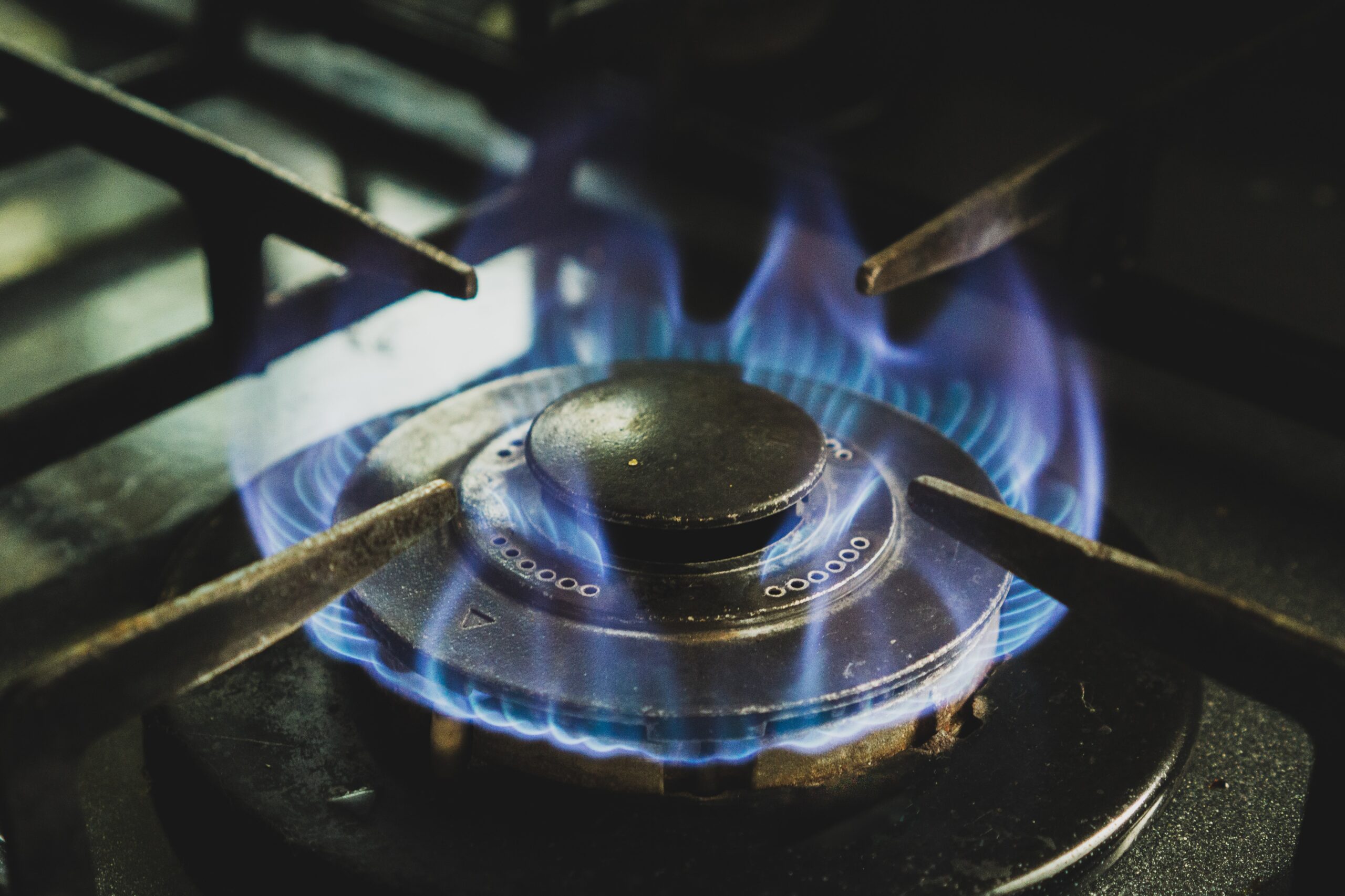
Natural gas to the rescue?A low-carbon fossil fuel may hold the key to weaning ourselves from coal
The development of potentially enormous new natural gas deposits in the U.S. has revived an old idea for cleaning up America’s power sector: using natural gas a low-carbon bridge from dirty coal to clean renewable power. What makes the idea enticing is that we don’t need to build much new infrastructure to significantly reduce carbon emissions. According to Geoffrey Styles, we already have an enormous amount of gas-powered generation capacity just lying around unused:
That last sentence is key. Although gas-powered plants are on average 37% more efficient than coal-fired plants, the best gas plant is far, far more efficient than the worst coal plant. As Sean Casten notes, even a relatively low carbon price can begin to shift generation on the margin. Sean somewhat fancifully observes that, at least in theory, if we fully used the current capacity of our gas plants, we could shut down 93% of our coal plants without decreasing our electricity supply. This isn’t really true on a technical level, and certainly the economics wouldn’t support a scenario like this. But the potential is big enough for Joe Romm to declare that natural gas “may be the single biggest game changer for climate action in the next two decades.” Natural gas is, of course, a fossil fuel, and everything from the extraction to the burning of it carries environmental consequences. Nevertheless, even Greenpeace is on board with the idea of significantly boosting use of natural gas as a low-carbon stepping stone away from coal and towards a truly no-carbon future. Comments
Post a comment |


Adam,
Thanks for the posting- it had some great information in it. Natural gas is the solution to providing clean, secure and affordable energy in America.
I linked your posting to our blog. Visit us at www.naturalgasforamerica.com .
Cheers,
Caroline
Reply
by Adam Stein on June 6, 2009 1:35 PM
Sweet! I love when my posts get picked up by industry associations!
To be clear, though, natural gas is not "the" solution to anything. It's a potential bridge from a very bad energy source (coal) to fully renewable energy sources that will be sustainable in the long term.
Reply
The combination of smart grid, renewables and natural gas as a bridge means that we really can dramatically cut GHG emissions in as little as a decade and at very little cost. And we can in fact dramatically scale back coal use very quickly--we don't have to put up with it for the 40 years that the coal industry likes to promote, and coming up with safe sequestration technology is optional--we don't have to sink a trillion dollars into it or rush to get it going. And, if you look at the shale map, many places like West Virginia that have relied on coal also have shale deposits with the potential to yield natural gas, so the local economies also have a bridge to cleaner technology.
Reply
Add natural gas vehicles of all kinds (large transport trucks, dump trucks, garbage trucks, cars, taxis, buses etc etc). Pakistan has over 5 million vehicles, Iran in the millions, India and China as well.
Here in Canada we could run a few pipelines down there in 10 years. Shut down the oil sands and use all that ng. We could also maybe get the Mackenzie Gas Project going and drop the price of natural gas like an anchor. It could easily be done, its just we need the political will.
Reply
Talking about gamechangers, check this out courtesy of Canada's National Research Council
http://www.nrc-cnrc.gc.ca/eng/education/innovations/spotlight/earthwindfire.html
Go to the bottom of the page and review Natural Gas Hydrates that are about in the permafrost that is eventually going to melt and vent into the atmosphere anyways causing massive damage if we dont find a way to capture it.
Reply
Hear hear! Natural gas should be the fuel of choice for all stationary consumers. Nobody should be burning coal or oil for generating electricity or for heating. Natural gas can also be sensible for fleet vehicles. Private cars, not so much.
Reply
I have a natural gas furnace in my basement - as does most of Canada - Why don't we just figure out how to modify my furnace to also generate electricity ?- The gas is already here and it is a pretty short power line to my kitchen - Heck why not use this "generator" to feed back into the grid like the solar power folks. ie millions of little gas fired electrical plants all over the country.
maurice
Reply
by Adam Stein on June 10, 2009 6:52 AM
Hi Maurice --
This exists. It's called micro-cogeneration, and there have been some excellent write-ups recently. See here and here. Also note the comments to the Grist post. It seems that the systems only make sense in certain specialized circumstances, but up north you might be a good candidate.
- Adam
Reply
by Mike A. on June 18, 2009 6:19 AM
I agree with Caroline completely. I'm all for the feasible development of completely renewable energy sources. However, I'm also a huge fan of natural gas, because it can not only be a bridge but it can also be a sustainable resource for the long-term. Consider that natural gas happens . . . "naturally". If allowed to simply escape into the atmosphere, it is far more detrimental to the environment than if it were burned. Natural gas bubbles to the surface of our oceans all day long uncaptured. That methane is going into our atmosphere not because of anything wrong that we did. It's just a biproduct of natural decomposition.
Landfills also create natural gas that can be captured for our use. Again, it's better than allowing it to just escape into the air.
There is no reason why we shouldn't use this natural resource as a fuel source in our cars and for electricity generation. Yes, carbon dioxide is released into the atmosphere, but CO2 is released every time humans and every other animal on the planet exhales.
Reply
Pennsylvania’s current natural gas boom has led to new, unprecedented environmental problems, including toxic pollution being released into local waterways, contaminated drinking water, drilling on public land and excessive water withdrawals from nearby streams.
Consider the examples of Cross Creek and Sugarcamp Run in Washington County. Both ran dry as natural gas drilling operations pumped all of the water out of these streams to use in nearby natural gas drilling operations. Or consider that natural gas companies inject between 50 and 150 different chemicals underground in their drilling processes, including arsenic, benzene, xylene and other known carcinogenic compounds.
The damage isn’t confined to private lands—it also occurs in our public lands. State officials have already leased 74,000 acres of state forestlands for natural gas drilling, and companies have proposed opening up another 2.7 million acres of public lands.
Reply
Talking about ng micro-cogen, check it out
http://microchp.blogspot.com/2009_03_01_archive.html
Japan has over 60,000 residential home heating and power units... from one company alone. We have got to get with this program.
Reply
Adam - Great post. Back to your point about thinking wholistically, imagine if so much of Canada's natural gas reserves weren't used to cook tar out of dirt to make most of our oil. I'd have to ask somebody like Amory Lovins to do the calculation, but expect using that gas to instead make electricity to power our cars would be more efficient.
You didn't talk about the super efficient coal plants or China - the world's largest emitter. China is mastering “ultra-supercritical” coal plant technology. "It uses extremely hot steam to achieve the highest efficiency, and by building many identical power plants at the same time, China has cut costs dramatically through economies of scale. It now can cost a third less to build an ultra-supercritical power plant in China than to build a less efficient coal-fired plant in the United States." Still think gas would have a better carbon-to-electricity footprint, but China has to import gas, so would be less interested in this equation.
http://www.nytimes.com/2009/05/11/world/asia/11coal.html?_r=1&scp=3&sq=china%20coal&st=cse
Reply
By richard schumacher on June 10, 2009 6:27 AM
Hear hear! Natural gas should be the fuel of choice for all stationary consumers. Nobody should be burning coal or oil for generating electricity or for heating. Natural gas can also be sensible for fleet vehicles. Private cars, not so much.
I have to agree with Richards comment we should not be burning coal and oil, it is doing more harm to our planet and we really have to be looking out for it more and more now so that we have something to leave behind for our children and their children to come
Reply
I dont really get why anyone would think ng cars are not a good idea.
Homegrown solution to a big problem, cleaner, widely available in urban areas and just need connections to gas stations, vastly cheaper with prices under $4/MMBTU, little modification of auto assembly lines, and more options for consumers.
The only problem I see is the volatity in price but then again oil has always been way more volatile because of speculators.
Reply
I agree with Caroline completely. I'm all for the feasible development of completely renewable energy sources. However, I'm also a huge fan of natural gas, because it can not only be a bridge but it can also be a sustainable resource for the long-term. Consider that natural gas happens . . . "naturally". If allowed to simply escape into the atmosphere, it is far more detrimental to the environment than if it were burned. Natural gas bubbles to the surface of our oceans all day long uncaptured. That methane is going into our atmosphere not because of anything wrong that we did. It's just a biproduct of natural decomposition.
Landfills also create natural gas that can be captured for our use. Again, it's better than allowing it to just escape into the air.
There is no reason why we shouldn't use this natural resource as a fuel source in our cars and for electricity generation. Yes, carbon dioxide is released into the atmosphere, but CO2 is released every time humans and every other animal on the planet exhales.
Reply
The only thing wrong with natural gas as a vehicle fuel is that it's not cheap: using it for private cars would require spending billions of dollars on thousands of refuelling stations and on retrofitting millions of cars. That money would be better spent on wind power, mass transit and more efficient cars. For equivalent reduction in fossil CO2 emissions it would be cheaper and faster to retrofit existing coal-fired power plants to use natural gas.
By the way, the fact that people and animals (and plants also, at night when they are not photosynthesizing) exhale CO2 is irrelevant to global warming, because the CO2 they exhale is not derived from fossil carbon.
Reply
Caroline Keddy’s comment and linking to a pro-natural gas organization highlights for me the clear irresponsibility of this story. In my opinion, TerraPass has lost a lot of credibility by advocating such a solution. There are clear environmental issues with mining, storing, delivering, and burning natural gas that you are obviously ignoring with a view for a quick fix to the coal problem. Natural Gas is not going to remain cheap either. Take a look at Alberta: They are looking at going nuclear to power oil sands production because the natural gas they are currently using for electricity production will be effectively gone in 10-15 years. Guess what that will do to the market price? This solution will only delay/stall the real solution – a GHG neutral solution.
Reply
Shut down the oil sands. Use that ng. MGP and Alaska pipelines and gas shale will all swamp the market and drop the price under $2/MMBTU. No need for nuclear because the oil sands will no longer be an issue and Albertas main export will be ng.
Then fuel cells using reformation will bridge us towards electrolysis of fresh water and in 10-20 years we will figure out how to do electrolysis on sea water so we dont run out of fresh water and we wont have to worry about being inundated by our oceans.
Voila.
Reply
All this talk about Natural Gas replacing coal. What are we going to do when the gas prices go out the roof (and they will) and all the coal plants are shutdown. What about the thousands of jobs that will be lost in coal plants, mines, and rail road. All this talk is by people that have no idea what is meant by affordable/reliable power. When we're on natural gas only and the consumers electric bill doubles who are you going to blame then.
Reply
