Where is the missing carbon?Research suggests that a lot of it may wind up inside fish
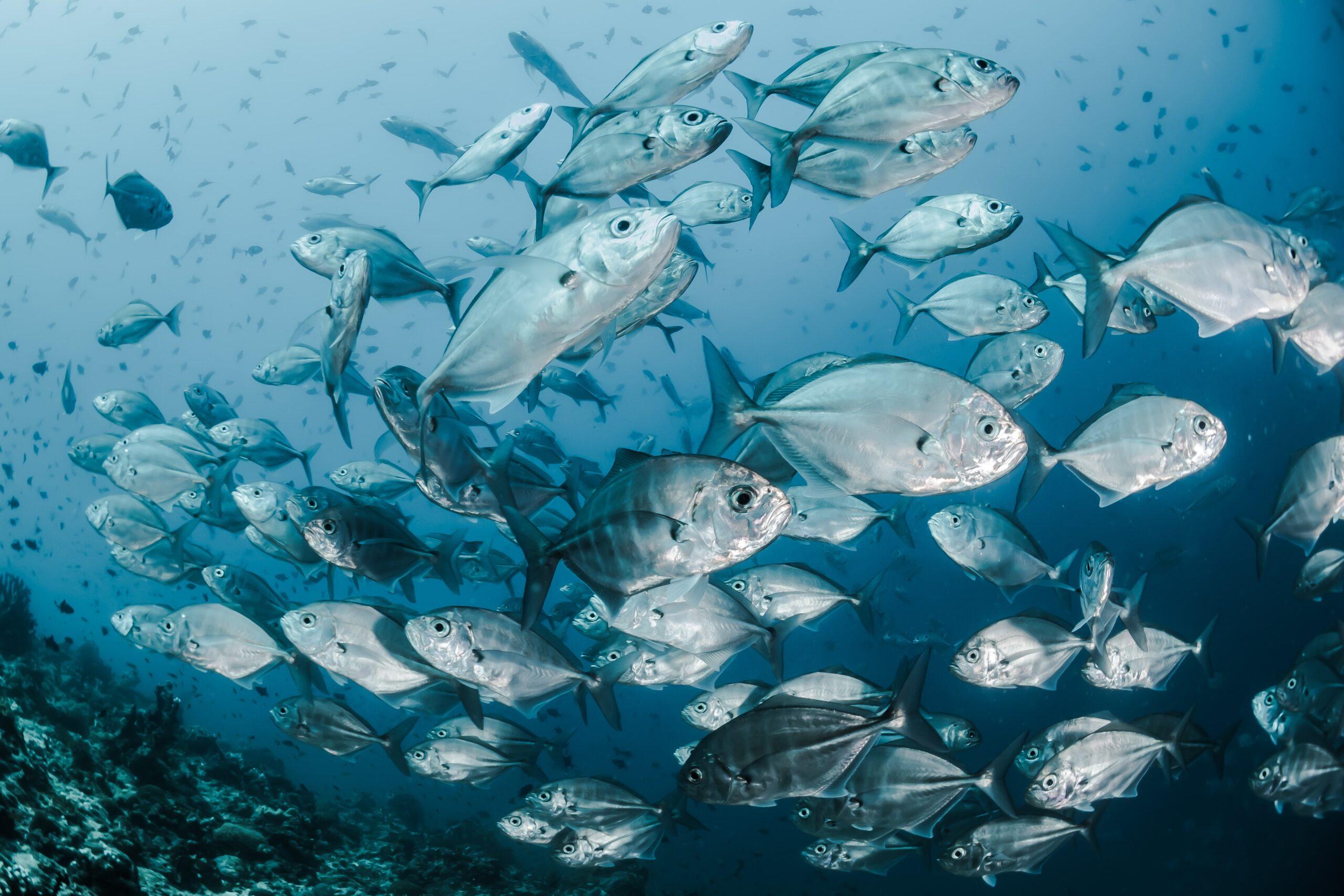
A giant hole in the global carbon budget may be plugged by an unlikely source: fish guts. A large proportion of manmade CO2 emissions drain back out of the atmosphere into various carbon sinks. Scientists have long known that approximately half the CO2 flux from the atmosphere goes to land-based sinks and half to the ocean. The problem is that the math hasn’t quite added up. Terrestrial sinks like forests and savannas, in addition to the long-term storage in soils, are relatively well quantified. Primary absorption in the oceans, too, has been fairly well described: satellite imagery of the open ocean has been used to map and calculate the amount of primary absorption across 70% of the earth’s surface. Still, the numbers contain a substantial gap. Since the terrestrial sinks are comparatively better understood, and the CO2 in the atmosphere has to go somewhere, most scientists assumed that it was somehow ending up in the ocean. But where? Almost twenty years ago, researchers at the University of Miami discovered that a species of toadfish carries tiny balls of calcite (CaCO3) in its gut. The authors suggested that this was likely a result of a filtration system in the fish’s stomach: water breathed in and out by the fish would need to be cleaned of various salts, including calcium and magnesium, to maintain proper salinity. These salts combine with carbon in seawater to form carbonates, which precipitate and collect in the fish’s gut. It turns out that toadfish aren’t unique. All bony fishes have this feature. A new study calculates that these tiny calcite stones could be a missing sink that accounts for 3-15% of the oceanic carbon absorption. That’s a big hole to plug, and the study’s figures are conservative. The actual number could be significantly higher. This provides another reason to be concerned with declining fish stocks worldwide. In addition to missing out on your favorite tuna sandwich, the global fisheries collapse could end a vital sink for atmospheric carbon. Image by Flickr user OCVA. Comments
The comments section is now closed. |


I love it when the terrapass blog gets so sciency.
Reply
Speaking of guts, one look at the ever-fattening U.S. citizen reveals yet another overlooked carbon sink: us. With carbon accounting for 18% of the human body, and the average American weighing in at 17 pounds overweight, the 300 million citizens of the U.S. are locking up more than 900,000,000 pounds of carbon just in their excess flesh.
Reply
True dat, David, but unlike calcite stones, the carbon in people will eventually return to the atmosphere. Also, the food used to create that extra body mass is highly carbon-intensive.
However, there is one way all those extra calories could be useful. If Americans started to bike or walk more often, that extra body mass would provide a nice alternative energy source to fossil fuels...
Reply
>This provides another reason to be concerned with declining fish stocks worldwide.
We have a very good solution on how to increase fish yield.
Nualgi is a micro nutrient for Diatom algae. When this is used, diatom algae bloom and these keep the water clean and become food for fish.
Diatoms themselves store quite a bit of Carbon and as per this article the fish store even more.
Nualgi is invented in India and patented worldwide.
best regards
Bhaskar
Reply
another interesting note- with global warming comes ocean acidification. Acidification means dissolution of all the carbonate built up in the ocean sediments. ie- the sink becomes a source. Then all the carbonate lock up in seds. is just like locking it up in obese americans- it will get returned.
Reply
Hi Michelle
Nualgi will increase Diatom Algae population and this will lead to increase in the dissolved oxygen level and thus reduce acidification.
Reply
Unfortunately, this article reflects a common misconception about carbon and calcite. Formation of calcite does use one carbon atom for each molecule of calcium carbonate, so it seems like it should increase the amount of carbon moving into the ocean. But at the same time, each calcium carbonate molecule's formation also reduces the ocean's alkalinity (basically, it ability to neutralize acid and maintain a constant pH) by 2 units. This causes the ocean to become more acidic, causing it to release CO2 to the atmosphere. So, though it's not what you'd expect, calcium carbonate formation actually reduces the amount of carbon moving from the atmosphere into the ocean. The article links fish to 3-15% of the ocean's calcium carbonate formation, not the ocean's carbon absorption - an important distinction.
Reply
nvite all your Facebook friends to the group 'Charcoal aginst Global Warming'!
Send the following (or a similar) message to them:
Do you realize that reduction of carbon dioxide emissions is not enough to reverse the climate to normal?
To do that, you need BOTH a heavv emission reduction COMBINED WITH a removal of the carbon dioxide already existing in the air. This can only be done by making char from plant residues and burying it in the soil.
Check out charcoal against global warming and learn how to....
Reply